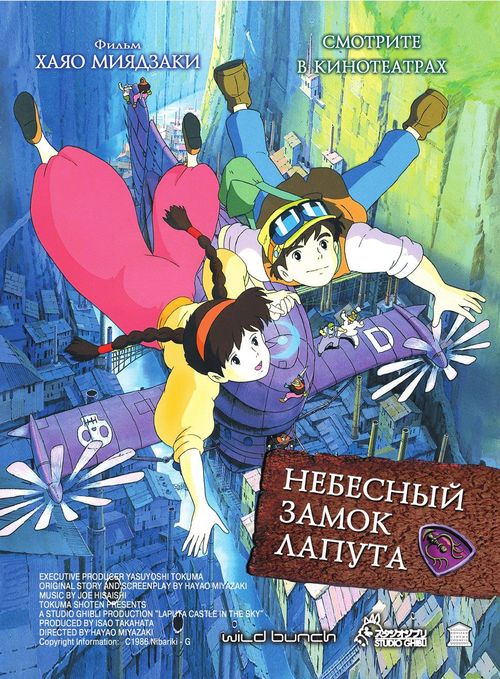
| Производство: | Япония174 |
|---|---|
| Премьера: | 02.08.19867 |
| В россии: | c 28.02.2008 |
| Жанр: | приключения111, сказка33, романтика30, паропанк1 |
| Тип: | Anime159, п/а18, 124 мин. |
| Режиссёр: | Миядзаки Хаяо22 |
| Автор оригинала: | Миядзаки Хаяо22 |
| Студия: | Ghibli16 |
| Видео: | DVDRip Xvid AVI |
| Аудио: | Rus , Rus (ext), JAP (ext)+SUB |
Описание
Альтернативная реальность, находящаяся на уровне технического развития Европы начала XX века (дизельпанк). Лапута, легендарный летающий остров, для одних является сосредоточением огромной военной мощи, для других — несметных сокровищ. Но небесный замок, затерявшийся среди облаков, возможно найти лишь с помощью кристалла Летающего Камня. Юная Сита, носившая талисман, который являлся для неё лишь семейной реликвией, не подозревала об этом, пока за ней и её кристаллом не началась охота. Фильм начинается с нападения воздушных пиратов на дирижабль. Сита срывается и падает вниз, однако волшебная сила талисмана спасает её. Ситу в бессознательном состоянии находит мальчик Пазу из шахтёрского городка. Однако пираты не оставляют надежд завладеть талисманом. Их конкурентами являются военные, которые с помощью талисмана пытаются найти путь на летающий остров Лапута, скрытый в облаках воздушного океана. Военные захватывают Ситу в плен. Талисман случайно возвращает к жизни ужасного боевого робота, и Сита с помощью Пазу бежит из крепости. У военных остается талисман, который ведет их дирижабль «Голиаф» к Лапуте. Их преследуют пираты, на сторону которых встают Пазу и Сита. Во главе военных оказывается Муска — один из потомков властителей Лапуты (дальний родственник Ситы), который мечтает с помощью талисмана и острова завладеть миром.



The game’s narrative premise is as simple as it is terrifying: you have been kidnapped and awakened in a strange house with no knowledge of how you arrived. This immediate lack of agency serves as the foundation for the game's horror. The "Fisherman," an looming, unseen threat for much of the early gameplay, represents an inevitable doom that can only be deferred through cleverness and speed. The house itself acts as a secondary antagonist; its creaking floors and locked doors are barriers that reinforce the player's vulnerability.
Fisherman's House is more than just a series of puzzles; it is an exercise in managing panic. By stripping the player of weapons and context, it taps into the primal fear of the unknown captor. The game's success lies in its ability to make the player feel like a cornered animal, where the only way out is to master the very environment designed to keep them trapped.
In the landscape of indie horror, the "escape-room" subgenre has become a staple for delivering high-tension, claustrophobic experiences. Fisherman's House is a quintessential example of this, placing players in a desperate battle for survival against a mysterious and lethal captor. Through its use of atmospheric dread, environmental storytelling, and intricate puzzle-solving, the game creates a psychological pressure cooker that challenges both the player's logic and their composure.
The roughly 2.8 GB file size suggests a focus on detailed environmental assets that build a sense of "place." Every bloodstain, discarded net, or locked chest tells a silent story of previous victims or the Fisherman's own descent into madness. While some critics note that the connection between the "fisherman" theme and the actual puzzles can sometimes feel loose, the sheer presence of the antagonist—who is often portrayed with high danger levels and game-breaking capabilities in community lore—keeps the stakes consistently high.
: Success requires deciphering cryptic codes and understanding the internal logic of the house's layout.
The prompt "" likely refers to the horror-survival game Fisherman's House , where players must escape a kidnapper's home. The following essay explores the game's mechanics, atmosphere, and the psychological tension of its escape-room gameplay. The Architect of Fear: An Analysis of Fisherman's House