Just-in-time.rar 🎯

Kenrich Petrochemicals, Inc.'s Ken-React® series of titanate, zirconate and aluminate organometallics provide advancement-in-the-state-of-the-art opportunities for plastics processing and products.

Kenrich Petrochemicals, Inc.'s Ken-React® series of titanate, zirconate and aluminate organometallics provide advancement-in-the-state-of-the-art opportunities for rubber processing and products.

Kenrich Petrochemicals, Inc.'s Ken-React® series of titanate, zirconate and aluminate organometallics provide advancement-in-the-state-of-the-art opportunities for advanced composites that require adhesion to: glass, carbon, aramid fibers.

Kenrich Petrochemicals, Inc.'s Ken-React® series of titanate, zirconate and aluminate organometallics provide advancement-in-the-state-of-the-art opportunities for adhesive compositions that require adhesion to non-polar substrates such as olefins and fluoropolymers.

Kenrich Petrochemicals, Inc.'s Ken-React® series of titanate, zirconate and aluminate organometallics provide advancement-in-the-state-of-the-art opportunities for paint, functional coatings, inks, plastisols and powder coatings.

Kenrich Petrochemicals, Inc.'s Ken-React® series of titanate, zirconate and aluminate organometallics provide advancement-in-the-state-of-the-art opportunities for color concentrates.

Kenrich Petrochemicals, Inc.'s Ken-React® series of titanate, zirconate and aluminate organometallics provide advancement-in-the-state-of-the-art opportunities for cosmetics and sun blocks.

Kenrich Petrochemicals, Inc.'s Ken-React® series of titanate, zirconate and aluminate organometallics provide advancement-in-the-state-of-the-art opportunities for energetic compositions, solid propellants, pyrotechnics, and explosives.

Please see our Product List for a full description of available Kenrich products.
Ken-React® Titanates,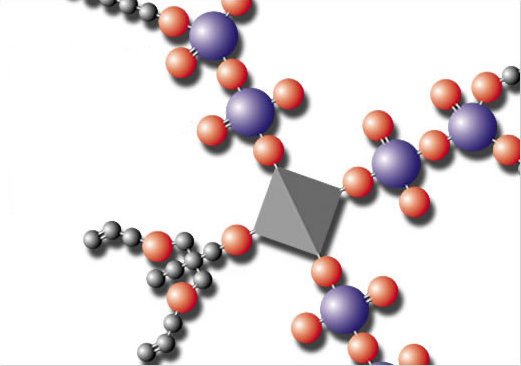

| Adhesion | Anti-Aging |
| Catalysis | Crosslink |
| Regeneration | Curative |
| Nano-Exfoliation | Flame Retardance |
| Hydrophobicity | Biodegration |
| Anti-Corrosion | Deagglomeration |
| Coupling | Polymer Flow |
| Flexibilization | Recyclability |

February 8-11, 2026
Savannah, GA

February 11-12, 2026
Cleveland, OH

April 14-16, 2026
Warrensville Heights, OH

September 15-17, 2026
The Westin Lombard, IL

The JIT philosophy was first introduced in the 1950s by the Japanese automaker Toyota, as part of its Toyota Production System (TPS). The TPS aimed to eliminate waste, reduce variability, and improve flow in the production process. Since then, JIT has become a widely accepted practice in various industries, including manufacturing, logistics, and retail.
Just-In-Time (JIT) inventory management is a powerful strategy that can help companies reduce costs, improve efficiency, and enhance customer satisfaction. While it presents several challenges, companies can overcome these challenges by following best practices, such as developing a robust demand forecasting system, establishing close supplier partnerships, and implementing a flexible production system. By adopting JIT, companies can gain a competitive edge in today's fast-paced business landscape. Just-In-Time.rar
In today's fast-paced business landscape, companies are constantly seeking ways to optimize their operations, reduce costs, and improve customer satisfaction. One strategy that has gained significant attention in recent years is Just-In-Time (JIT) inventory management. This approach has been widely adopted by organizations across various industries, and for good reason. In this in-depth guide, we'll explore the concept of JIT, its benefits, challenges, and best practices for implementation. The JIT philosophy was first introduced in the